


A report by the international environmental coalition Rivers without Boundaries, titled “With Eyes Wide Shut: Ignoring the Transboundary and Cumulative Impacts of the Rogun HPP,” concludes that the project’s environmental and social impact assessment has fundamental shortcomings and does not fully comply with World Bank standards. The review of the giant hydropower plant project in Tajikistan asserts that the current impact assessment is based on outdated 2014 data and static scenarios that fail to account for climate change dynamics and the actual hydrological conditions in the Amu Darya basin.
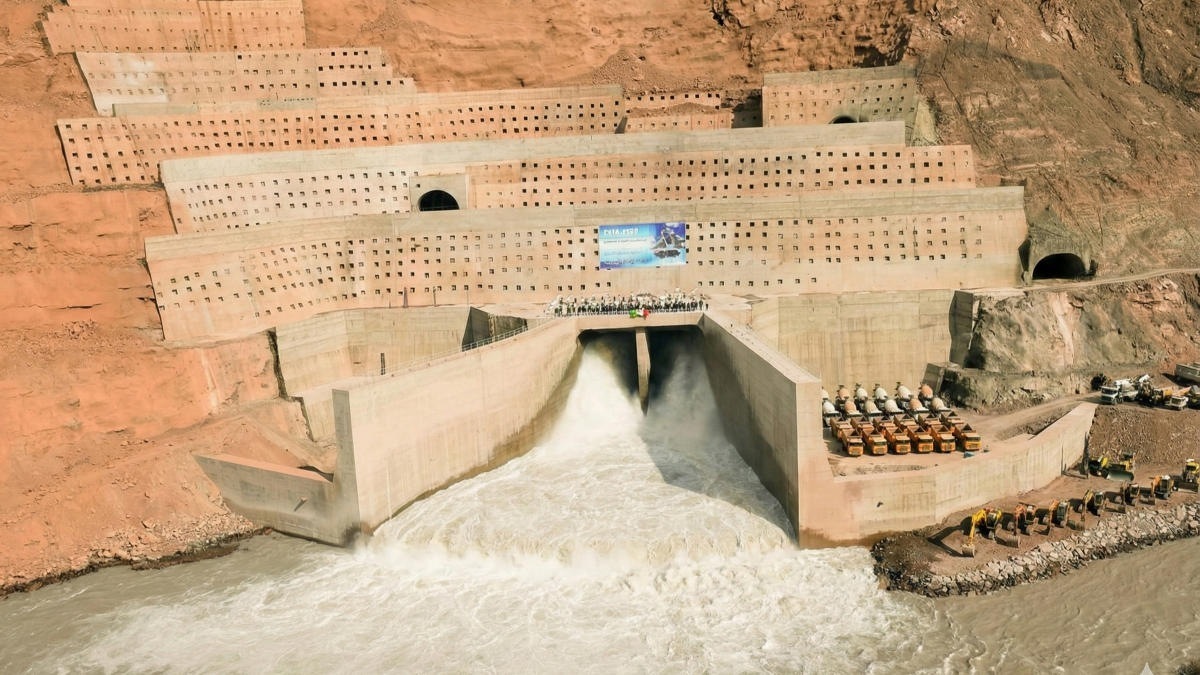
The analysis points to the project developers’ failure to evaluate key external factors, such as the construction of the Qosh Tepa canal in Afghanistan, which is expected to have a significant effect on the region’s water balance. The project’s impact is presented as “neutral” by its developers, a claim the report disputes as misleading. The operation of the Rogun reservoir is projected to extend the operational life of the Vakhsh HPP cascade by 60–100 years, which would solidify an existing water flow regime damaging to downstream ecosystems, including the Tigrovaya Balka Nature Reserve, a UNESCO World Heritage site.
The coalition’s review identifies the exclusion of the most acute and difficult scenarios from the analysis. The assertion that the world’s tallest dam would have a neutral impact is seen as contradicting the principles of cumulative effect assessment. Without firm commitments to environmental flows and artificial floods, the project threatens to prolong the degradation of unique natural areas for another century, in direct violation of the conservation principles of international financial institutions.
Particular attention is given to the risks facing biodiversity and the Amu Darya delta’s wetlands, which are protected by the Ramsar Convention. The Rogun HPP impact assessment lacks clear mechanisms to guarantee water supply to these critical zones during arid periods. Furthermore, the coalition notes serious deficiencies in the consultation process with the public and stakeholders in downstream countries, questioning the legitimacy of conclusions regarding the project’s social acceptability. Risks associated with seasonal flow redistribution have not been adequately addressed, creating a precedent for advancing a major infrastructure project without a solid foundation of transboundary cooperation.
To address these issues, Rivers without Boundaries recommends conducting a full Strategic Environmental Assessment (SEA) for the entire Amu Darya basin. The coalition insists on the development of legally binding flow management plans that include measures for climate change adaptation and biodiversity conservation. Without a radical revision of the assessment approach and the implementation of damage mitigation and compensation mechanisms, the Rogun HPP project risks becoming a source of long-term environmental and social tension in Central Asia.
Leave a Reply