


On January 22, the lower house of Tajikistan’s parliament passed the bill “On the Use of the National Bank of Tajikistan’s Reserve Fund,” which is aimed at financing the construction of the Rogun HPP. The bill was developed at the initiative of the country’s President, Emomali Rahmon, according to “Sadoi Mardum”, the official newspaper of the parliament’s lower house.
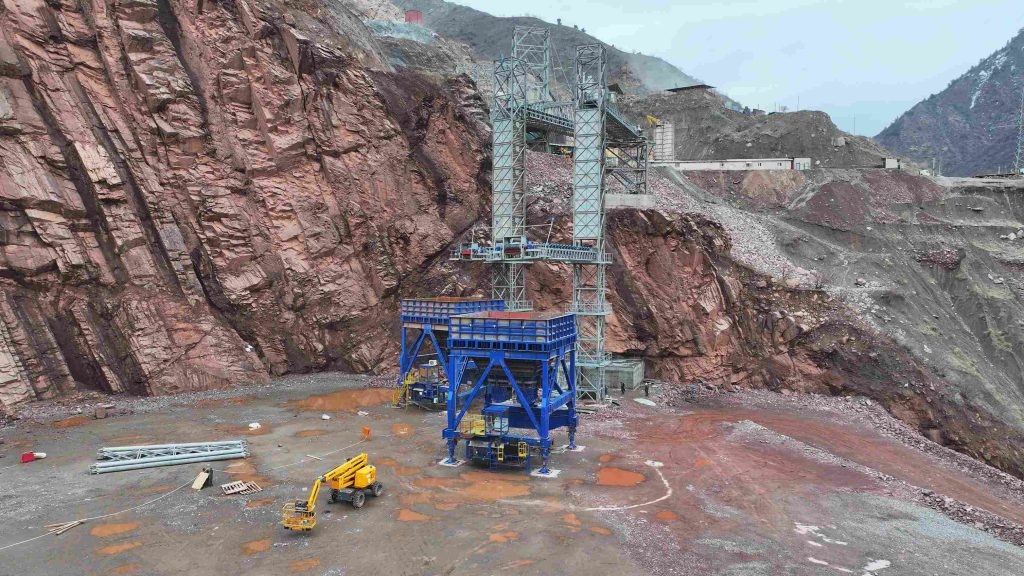
Addressing the deputies, Tajikistan’s Minister of Finance, Fayziddin Kahhorzoda, noted that the document provides for the use of the NBT reserve fund through the state budget to finance the construction of the strategically important facility — the Rogun HPP.
According to him, the bill involves the transfer of the remaining balance of the NBT reserve fund in the amount of 916 million somoni (about $100 million), accumulated based on the results of financial activities for 2024.
The Minister emphasized that the document is aimed at achieving the country’s energy independence by 2027, as well as reducing dependence on external debt and grant sources of financing.
It should be noted that in the 2026 state budget, approximately 15 billion somoni (over $1.6 billion) has been allocated for the financing of the fuel and energy complex. The majority of these funds are directed toward completing the construction of the Rogun HPP.
This amount constitutes 22.4% of the total state budget expenditures for the coming year. The total expenditure of the country’s “main wallet” is set at approximately 67 billion somoni ($7.2 billion).
The republic’s authorities previously reported that from 2008 to the present, over 48.1 billion somoni from the state budget and other sources has been spent on the Rogun project.
It was noted that to complete Rogun, agreements have been reached with development partners for more than $2 billion, including grants from the World Bank ($650 million), loans from the Asian Infrastructure Investment Bank ($500 million), the Islamic Development Bank and Arab funds ($450 million), and a grant from the Qatar Fund for Development ($50 million).
Negotiations are ongoing for an additional $1.7 billion.
Meanwhile, the Rationale for Tajikistan’s Sovereign Credit Rating, prepared by the international rating agency Standard & Poor’s Global Ratings, states that financing for the Rogun HPP project from development partners, specifically the World Bank, is being delayed pending the fulfillment of remaining conditions.
The remaining cost of constructing the Rogun HPP, according to S&P data, is estimated at $6.4 billion.
“The government has agreed on financing half of this amount with a consortium of international partners; the rest must come from the budget and project revenues. The preliminary package includes $1.5 billion in non-concessional loans, $850 million in grants, and $550 million in concessional loans. It is known that part of the grants depends on Tajikistan’s status as a ‘least developed country,’ which may be revised in 2026,” the rating agency specialists emphasize.
Leave a Reply