


Kazakhstan and Tajikistan have agreed to cooperate in the energy sector, Trend reports via Kazakh government decree.
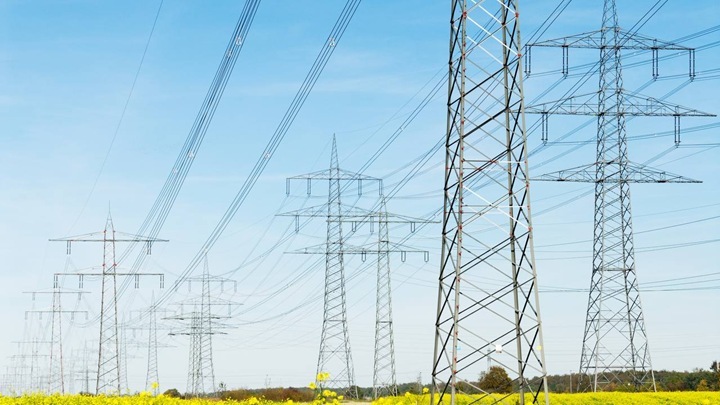
“To approve the attached draft Agreement between the Government of the Republic of Kazakhstan and the Government of the Republic of Tajikistan on Cooperation in the Field of Electric Power,” the document states.
The designated operators for the planned electricity purchase and sale under the agreement are:
From the Republic of Kazakhstan (buyer) – LLP “Settlement and Financial Center for Support of Renewable Energy Sources” (RFC for RES), a subordinate organization of the Ministry of Energy of Kazakhstan;
From the Republic of Tajikistan (seller) – OJSC “Rogun Hydropower Plant”.
The agreement is valid for 20 years, with the possibility of a 10-year extension.
Key conditions of the agreement include:
- Electricity will be supplied during peak deficit hours in the North-South zone of Kazakhstan’s Unified Energy System via interstate power lines, taking into account technical transit capabilities through neighboring countries. Irregular supply schedules will not be considered as power regulation.
- Planned volumes will be included in the daily production-consumption schedules approved by JSC “KEGOC” and are not subject to adjustment. Final data is confirmed by the CDC “Energy” and used for customs declarations.
The agreement duration is 20 years, extendable by 10 years.
Estimated supply volumes do not create financial obligations between the parties.
Settlement of unplanned flows will be handled through separate agreements between the power systems of neighboring states.
OJSC “Rogun Hydropower Plant” is responsible for electricity transit to Kazakhstan’s border.
Electricity price will be calculated as:
- $0.034 per kWh (with 0 percent VAT) for the supply from Rogun HPP;
- Plus transit costs through neighboring countries (documentary confirmation required).
Price indexation will be conducted annually starting from the second year of supply, based on the U.S. Producer Price Index (PPI).
Technical terms of the contract must be confirmed by authorized representatives of both parties and the transit states.
Arbitration disputes will be resolved at the Singapore International Arbitration Centre (SIAC).
The buyer must pay for the electricity within 35 calendar days after the end of the billing period and provide a three-month renewable bank guarantee issued by a second-tier bank rated at least:
- “BBB-” (S&P),
- “BBB-” (Fitch),
- “Baa3” (Moody’s).
For each unit of electricity purchased, the buyer will receive a corresponding amount of carbon credits after the Rogun HPP is commissioned.
The agreement is governed by Singaporean law, and currency relations are subject to the respective countries’ currency regulations. In the event of early termination, both parties must settle any outstanding obligations.
In February of this year, following negotiations between the foreign ministers of Kazakhstan and Tajikistan in Astana, it was noted that electricity exports to Kazakhstan would open new opportunities for bilateral cooperation in this sector.
Leave a Reply