


Financing of the Rogun HPP project by development partners, in particular the World Bank, is delayed until the remaining conditions are met, according to the justification of Tajikistan’s sovereign rating prepared by the international rating agency Standard & Poor’s Global Ratings.
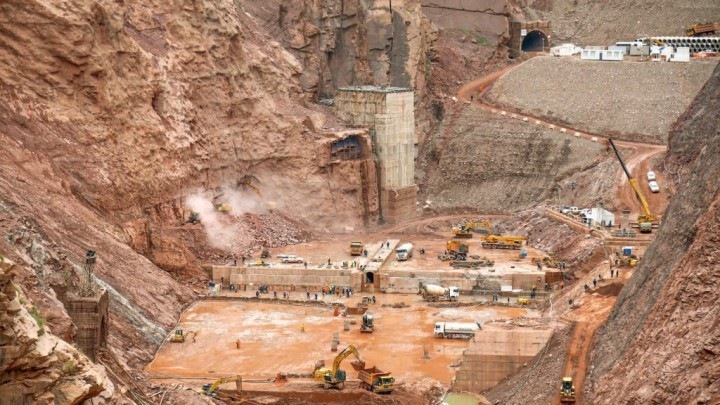
“The government has agreed on financing packages with a consortium of multilateral and bilateral partners to cover about 50% of the required $6.4 billion (40% of projected GDP in 2025) to complete the project by 2035,” the publication emphasizes.
It is noted that the completion of the Rogun HPP began in 2016, more than $3 billion has already been invested to put into operation the first two of the six turbines (the third is expected in 2025).
“After the completion of the project in 2035, the country’s power generation capacity will grow by more than 50%, which will solve the problem of electricity shortage and export about 60% of the generation to Central Asia. However, the project remains costly and displaces other government capital investments,” S&P analysts emphasize.
The justification notes that the remaining cost of the construction of the Rogun HPP is estimated at $6.4 billion.
“The government has agreed to finance half of this amount with a consortium of international partners, the rest should come from the budget and revenues from the project. The preliminary package includes $1.5 billion in non-concessional loans, $850 million in grants and $550 million in concessional loans. It is known that part of the grants depends on Tajikistan’s status as a “least developed country”, which may be reviewed in 2026,” S&P representatives note.
The main conditions that Tajikistan must fulfill, according to the World Bank, are:
- – preparation and adoption of a macroeconomically sustainable financing plan that does not create an excessive debt burden on the state budget;
- – availability of a stable commercial model and preparation of long-term contracts for the sale of electricity to both domestic and regional customers;
- – development of a sustainable financial and commercial framework;
- – improving dam safety;
- – strengthening institutional capacity;
- – development and implementation of plans that meet environmental and social standards;
- – the introduction of mechanisms for distributing benefits to the population: part of the income from the sale of electricity is directed to social support. For example, 3% of the revenue during construction, and 5% after its completion;
- – creation and active leadership of the Rogun Coordination Group under the leadership of the World Bank;
- – introduction of transparency measures – public disclosure of contracts and financing plans;
- – implementing structural reforms that support sustainable economic growth and reduce vulnerability.
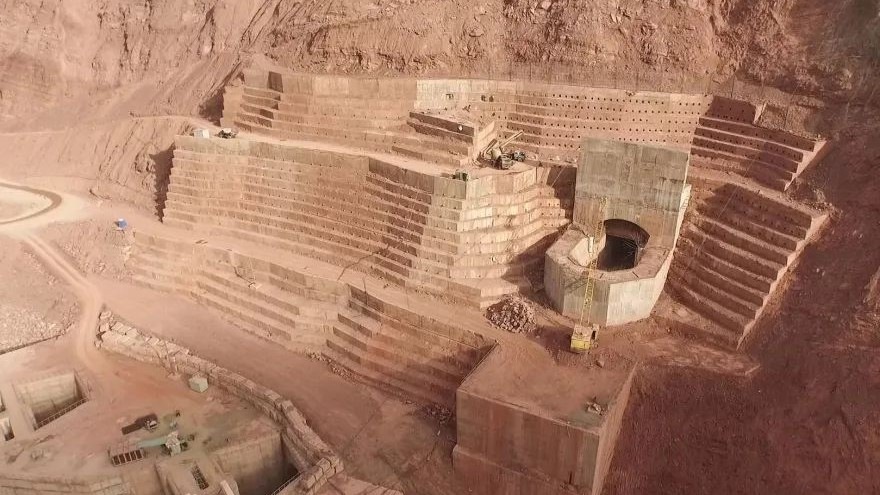
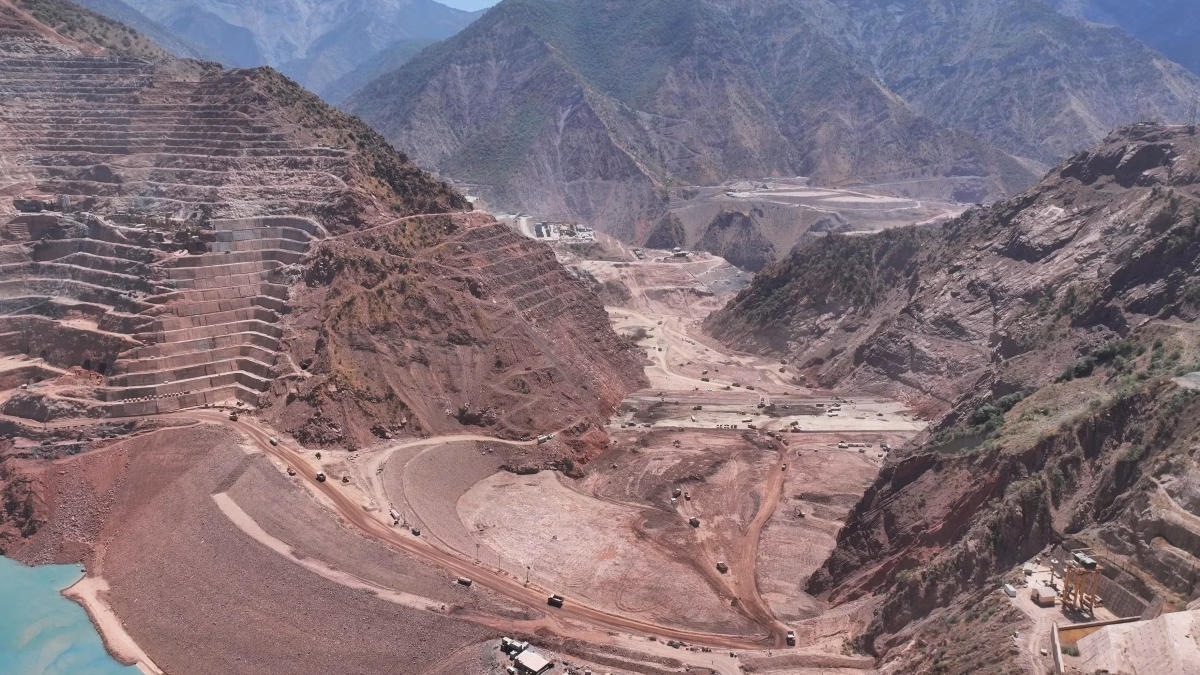
The Rogun HPP, with an installed capacity of 3,780 MW, will become the largest hydroelectric power plant in Central Asia. It is expected that after the complete commissioning of the HPP, the annual volume of electricity generation will exceed 14.5 billion kWh.
6 units with a capacity of 630 MW each will be installed in the engine room of the station. The launch of the last unit is expected in 2029.
Currently, two units of the Rogun HPP are operating at low capacity, which were commissioned in 2018 and 2019.
According to the Ministry of Energy, in 2024, the Rogun HPP generated 1.220 billion kWh of electricity. This represents 5.5% of the total electricity generated in the republic.
Leave a Reply